
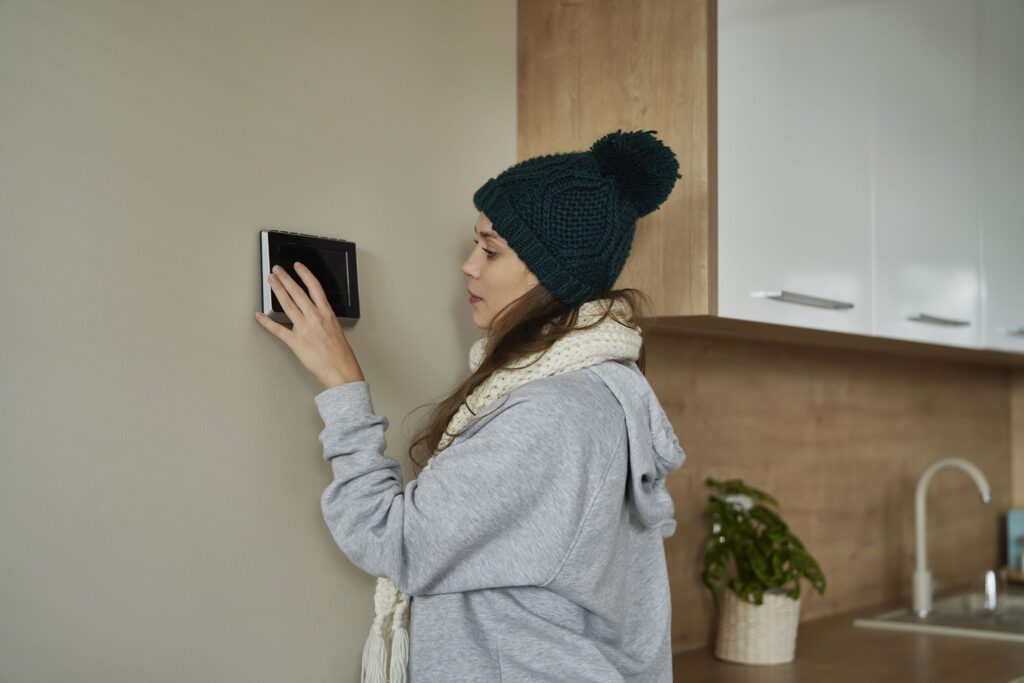
When the heat stops working on a cold Rhode Island day, it’s natural to want an answer right away. You may notice the house getting colder, hear the furnace trying to start, or discover that the radiators aren’t warming up.
Some problems involve basic settings or a power interruption. Others need professional heating repair.
Before trying to restart equipment, make sure there isn’t a safety concern. Then check a few simple things that can help you understand what’s happening.
First, Check for Immediate Safety Concerns
If you smell gas, suspect a carbon monoxide problem, notice smoke, or see signs of another serious hazard, leave the affected area and contact emergency services or the appropriate utility.
Don’t stay near the equipment to investigate a suspected gas leak.
Carbon monoxide has no smell, so a carbon monoxide alarm requires attention even when nothing seems unusual.
If the indoor temperature is dropping to an unsafe level, make arrangements to protect everyone in the home. Infants, older adults, and people with certain health conditions may be particularly vulnerable to cold conditions.
Avoid using an oven, outdoor grill, or unvented fuel-burning equipment to heat your home. These can create serious fire or carbon monoxide hazards.
Once you’ve ruled out immediate danger, move on to the basic checks below.
Check Your Thermostat Settings
Start with the thermostat.
Make sure it’s set to Heat and that the requested temperature is higher than the current room temperature.
If you use a programmable thermostat, check the schedule. A setback setting may be keeping the system from calling for heat when you expect it to run.
If the display is blank and the thermostat uses replaceable batteries, check them according to the manufacturer’s instructions.
Some homes have multiple heating zones. If one room or area is cold while another is warm, note which thermostats and zones are affected.
After making a basic adjustment, allow the equipment time to respond. Repeatedly changing settings won’t solve an underlying mechanical problem.

Check Whether the System Has Power
Even heating equipment that runs on oil or natural gas usually needs electricity for controls and other components.
If your thermostat or equipment display is blank, check whether the rest of the house has power.
A neighborhood outage may explain why the system isn’t operating.
If the home has power but the heating equipment doesn’t, you can observe accessible switches or indicators identified in your owner’s manual.
Don’t remove equipment panels or handle exposed wiring.
If a circuit breaker repeatedly trips, stop resetting it. Repeated tripping can indicate an electrical problem that needs professional attention.
A furnace that won’t turn on may have an issue with a control, electrical component, or safety device that isn’t visible from outside the equipment.
Check for an Obvious Airflow Problem
If you have a forced-air furnace, look at the vents and returns in your home.
Make sure furniture, rugs, or stored items aren’t blocking airflow.
If your system has a homeowner-accessible filter, check it according to the equipment instructions. A heavily clogged filter can restrict airflow and contribute to heating problems.
Use the correct replacement filter for your system. Don’t operate the equipment without a required filter or open internal compartments to investigate.
If the furnace still doesn’t heat properly, a technician should determine what’s causing the problem.
UG Nasons provides information about these systems on its Furnace Service page.
Consider Whether Fuel Service Has Been Interrupted
If your heating system uses oil, consider whether a delivery issue could be involved.
For a natural gas system, check whether your utility has reported a service interruption.
Only review information that’s safely available, such as delivery records or utility notices.
Don’t open fuel lines, adjust gas valves, bleed an oil burner, or attempt unfamiliar ignition procedures.
If a fuel supply problem is suspected, contact the appropriate provider or a qualified heating professional for guidance.
Restoring the fuel supply may not be the only step required to return equipment to normal operation.
Different Heating Systems Have Different Problems
The next step depends on whether your home uses a furnace, boiler, or heat pump.
If Your Furnace Isn’t Turning On
A furnace may fail to start, shut down shortly after starting, or run without adequately heating the home.
The cause could involve controls, ignition, airflow, or another component.
If an older furnace has a recurring pilot-light issue, UG Nasons has a separate guide explaining why a furnace pilot light keeps going out.
Avoid attempting repairs to ignition or fuel components yourself.
If Your Boiler Isn’t Heating
A boiler may stop providing heat to the entire house or affect only certain rooms or zones.
Note whether the problem involves every radiator or baseboard or just one part of the home.
Don’t adjust boiler pressure, open relief valves, or attempt to repair circulating components.
A technician can determine whether the problem involves the boiler itself, controls, or the heating distribution system.
If Your Heat Pump Isn’t Keeping Up
Heat pumps operate differently from furnaces, and their behavior can change during cold weather.
However, persistent inadequate heating, repeated shutdowns, or a system that doesn’t respond to its controls deserves attention.
For more information, see UG Nasons’ article on heat pumps not heating properly in cold weather.
When Should You Call for Heating Repair?
Basic checks should be simple and noninvasive.
If the thermostat is set correctly, there’s no obvious power interruption, and the system still isn’t heating, it’s time to arrange a professional assessment.
Other reasons to stop troubleshooting include:
- Repeated equipment shutdowns
- Unusual sounds or persistent burning odors
- Visible leaks
- A breaker that continues to trip
- A heating system that cannot maintain a safe indoor temperature
For homeowners looking for HVAC repair in RI, identifying the equipment type and symptoms is a useful first step. You don’t need to know which part has failed.
What to Tell the Heating Technician
When you contact a heating company, explain what you’ve observed.
Mention whether you have a furnace, boiler, or heat pump, if you know.
Describe when the problem started, whether the entire home is affected, and whether the equipment displays an error message.
If you noticed unusual noises or completed basic thermostat and power checks, share that information too.
These details can help the technician understand the problem without requiring you to perform unsafe diagnostic work.
Get Help When Your Home Has No Heat
A loss of heat is inconvenient and can become serious during cold weather. Check simple controls, avoid hazardous repairs, and arrange professional service when the problem persists.
UG Nasons provides heating services for customers in its Rhode Island service area.
If your heating system isn’t working, contact UG Nasons to request service. For urgent heating concerns, call (401) 847-2497 to discuss available assistance.