
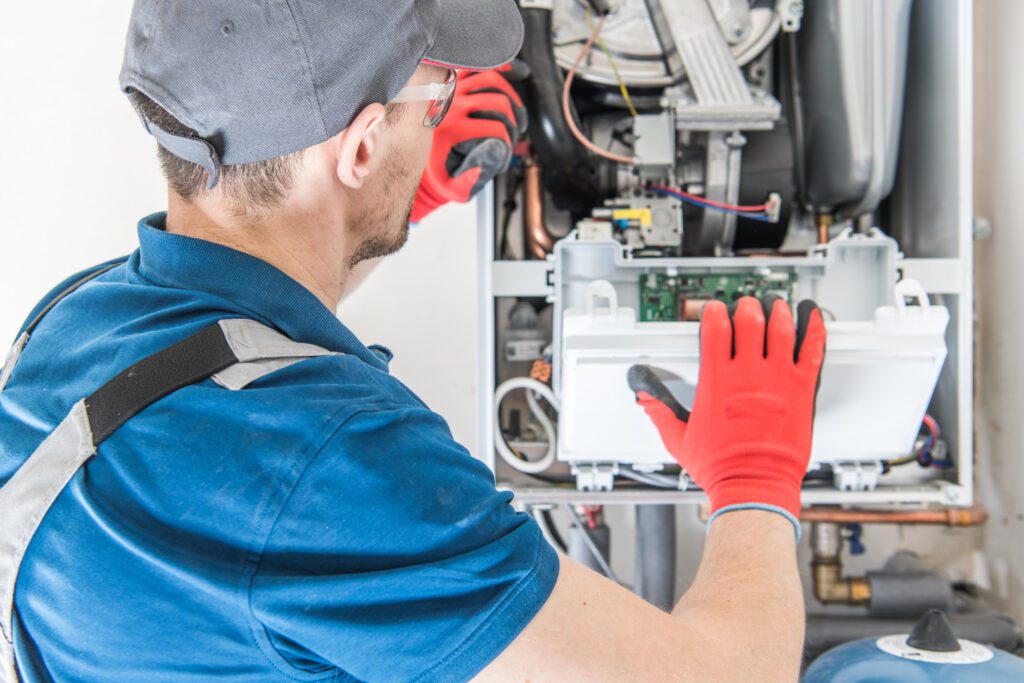
When your furnace develops a problem, the first question is usually whether it can be repaired. If you’ve dealt with several breakdowns, you may also wonder whether putting more money into the equipment makes sense.
The furnace replacement vs repair decision isn’t always straightforward.
A furnace that’s been in service for many years may still have a repairable problem. A newer system can also develop a serious fault that requires careful evaluation.
The right choice depends on the diagnosis, equipment condition, repair history, and how well the system meets your home’s needs.
Here’s how to approach the decision.
Start With a Professional Diagnosis
Before deciding to replace your furnace, find out what’s actually wrong.
A furnace that won’t start may have a problem involving a control, electrical component, ignition system, or another part.
Some faults can be repaired without replacing the entire system.
Other problems, particularly those involving significant deterioration or safety concerns, may change the recommendation.
Ask the technician to explain the diagnosis and whether the equipment can be operated safely.
If replacement is recommended, you should understand why a repair isn’t appropriate or may not be a reasonable long-term option.
The diagnosis should guide the decision, not the other way around.
Consider the Furnace’s Overall Condition
Equipment age is useful information, but it doesn’t tell the whole story.
Two furnaces of similar age can be in very different condition depending on maintenance, installation, operating conditions, and repair history.
Think about how your system has performed over recent heating seasons.
Has it been dependable apart from the current problem? Have breakdowns become more frequent? Does it struggle to maintain a comfortable temperature?
A single isolated failure is different from a pattern of recurring problems.
The technician should also consider whether appropriate replacement parts are available and whether other significant concerns have been identified.
The goal is to understand the condition of the complete furnace, not simply the component that failed today.
Look at the Repair History
Repeated service calls can influence whether replacement deserves consideration.
If the furnace has experienced the same problem several times, ask whether the underlying cause has been identified.
If different components have been failing, the technician may need to evaluate the broader condition of the system.
However, several past repairs don’t automatically mean a new furnace is necessary.
What matters is the nature of the failures, whether they were resolved, and what the equipment’s current condition suggests.
Keep service records when possible. They can help a contractor understand the system’s history and make a more informed recommendation.
Compare What Each Option Will Accomplish
A repair estimate and a replacement estimate represent different types of work.
The repair may address a specific fault and restore normal operation.
Replacement involves selecting and installing new equipment, along with any necessary changes to connections, controls, or other components.
Ask what the proposed repair will fix and whether any significant concerns will remain.
For replacement, ask what is included and whether existing ductwork or controls need attention.
Avoid relying on a rigid rule that says a furnace must be replaced once a repair reaches a certain percentage of the replacement cost.
Those formulas can’t account for every equipment condition, repair type, or household need.
A more useful comparison considers the complete scope and expected outcome of each option.
Don’t Overlook Comfort Problems
Sometimes the furnace still runs, but the home doesn’t feel comfortable.
Certain rooms may stay cold, the system may operate inconsistently, or the thermostat setting may be difficult to maintain.
These concerns deserve attention, but they don’t necessarily mean the furnace is the only problem.
Ductwork restrictions, insulation, air leakage, thermostat location, and equipment sizing can all affect comfort.
Replacing the furnace without addressing an underlying distribution problem may leave the same issue unresolved.
Tell the contractor which rooms are affected and when the problem occurs.
A complete assessment can help determine whether repair, replacement, or another improvement is appropriate.
When Furnace Repair May Be the Better Choice
Repair may make sense when a qualified technician identifies a specific, correctable problem and the rest of the equipment is in serviceable condition.
It may also be appropriate when:
- The furnace has otherwise been dependable.
- The necessary parts are available.
- The repair is expected to restore appropriate operation.
- No unresolved safety concern makes continued use inadvisable.
- The equipment still meets the home’s heating needs.
A furnace shouldn’t be replaced simply because it has experienced one failure.
Ask what the repair involves and what you should expect afterward.
When Furnace Replacement Deserves Consideration
Replacement may be worth evaluating when the furnace has significant deterioration, recurring major failures, or a safety problem that can’t be appropriately resolved.
It may also be reasonable when the system no longer meets the home’s heating needs or when necessary repairs are becoming increasingly difficult.
A replacement decision should include more than choosing a new furnace model.
The contractor should evaluate the home’s heating requirements, existing ductwork, equipment placement, and controls.
A new furnace needs to be suitable for the property. Choosing equipment based only on the capacity of the old unit may not be appropriate.
UG Nasons provides information about heating replacement and installation on its Heating Services page.
Ask About the Complete Heating System
A furnace works with ductwork, return-air pathways, thermostats, and other components.
If those parts of the system have problems, replacing the furnace alone may not address every concern.
Ask whether the existing distribution system is suitable for the proposed equipment.
If the contractor recommends modifications, find out why they’re necessary and whether they’re included in the estimate.
For homeowners considering a different heating approach, it’s also reasonable to discuss available alternatives.
UG Nasons’ residential HVAC information provides a broader view of its services.
Questions to Ask Before Making Your Decision
When you’re deciding whether to repair or replace a furnace, ask:
- What caused the current problem?
- Is the furnace safe to operate?
- What would the proposed repair accomplish?
- Have other significant equipment problems been identified?
- Are the necessary repair parts available?
- Why is replacement being recommended, if applicable?
- How will the replacement equipment be selected?
- Will existing ductwork or controls need changes?
- What warranty terms apply to each option?
Clear answers help you compare the choices without relying on guesswork.
Make the Decision That Fits Your Furnace
There’s no single age or repair-cost rule that applies to every furnace.
The best decision starts with a diagnosis and considers the equipment’s condition, service history, safety, and ability to heat your home properly.
UG Nasons provides furnace service for homeowners in its Rhode Island service area.
Unsure whether to repair or replace your furnace? Contact UG Nasons to request an assessment and discuss your options.