
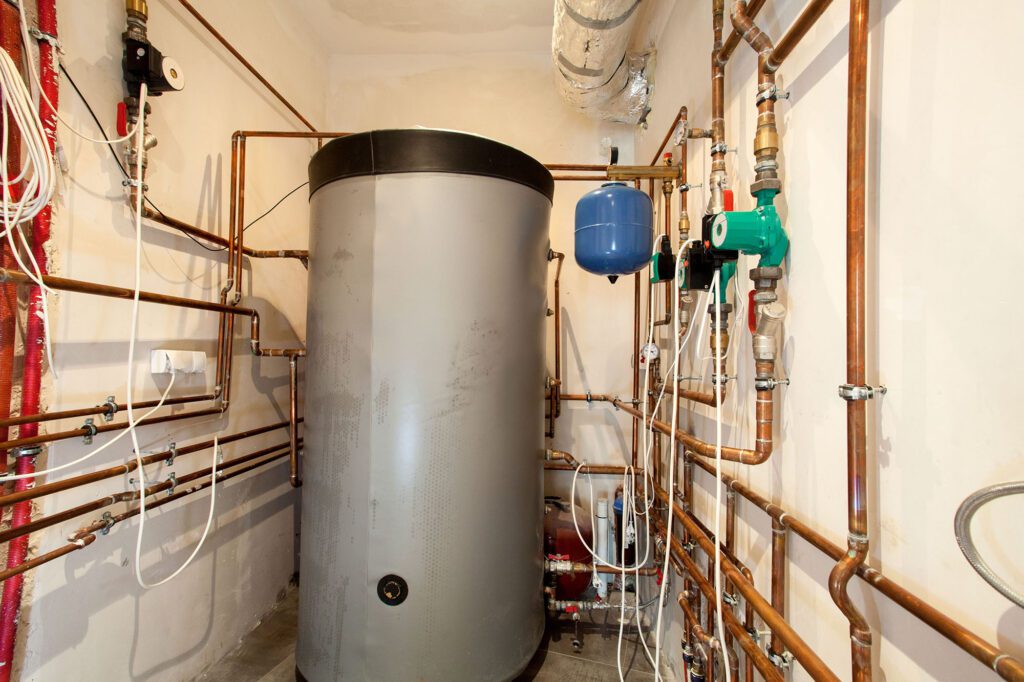
When your boiler stops heating the house, you want to know what’s wrong and how to get comfortable again. It can be even more confusing when the radiators are warm but the taps have no hot water.
Those symptoms don’t always have the same cause.
Some boilers provide space heating only. Others are connected to equipment that also supplies domestic hot water. Understanding which function has stopped working can help you describe the problem and avoid unnecessary troubleshooting.
If your boiler is not heating, start with these safe, basic checks.
First, Identify Which Part of the System Isn’t Working
Before looking at the boiler, consider exactly what’s happening.
There are three common situations.
Your Home Has No Heat
The radiators, baseboards, or other heating components aren’t warming the house.
The problem may affect the entire heating system or only certain rooms.
Your Home Has Heat but No Hot Water
The heating system appears to work, but hot water isn’t available at sinks, showers, or other fixtures.
This may involve a separate water-heating component rather than the boiler’s space-heating function.
You Have Neither Heat nor Hot Water
Both functions have stopped working.
If the boiler supplies heat to both systems, there may be a shared problem. However, the cause still depends on the equipment arrangement.
Not every home uses its boiler to produce domestic hot water, so identifying the setup is an important first step.
Check Your Thermostat Settings
If the house isn’t warming up, start with the thermostat.
Confirm that it’s set to heating mode and that the requested temperature is above the current room temperature.
If your thermostat follows a schedule, check whether a programmed setting has reduced the heating demand.
Some hydronic heating systems have multiple zones, each controlled by a different thermostat.
If one zone works and another doesn’t, note which rooms are affected.
Don’t attempt to open zone-control equipment or adjust unfamiliar valves. Simply identifying the affected areas can be useful when speaking with a technician.
Check for an Obvious Power Problem
Boilers generally need electricity for controls and other operating components, even when they use oil or gas.
Check whether the rest of your home has power.
If there’s a neighborhood outage, that may explain why the heating system isn’t operating.
You can also observe accessible displays or controls described in the owner’s manual.
If you see an error message, record it for the technician.
Don’t remove equipment panels, bypass safety switches, or attempt electrical repairs.
If a breaker repeatedly trips, stop resetting it and arrange professional attention.
If You Have Heat but No Hot Water
When the house is warm but the taps aren’t producing hot water, the first question is how your domestic water is heated.
Some homes have a separate water heater. Others use an indirect water heater connected to the boiler.
Certain boiler arrangements can also supply domestic hot water directly.
The appropriate diagnosis depends on which setup you have.
Check whether the hot water problem affects every fixture or only one sink or shower.
If one fixture is affected, the problem may be local to that fixture rather than the main water-heating equipment.
If the whole home has lost hot water, note when the problem started and whether it developed gradually or suddenly.
Avoid adjusting mixing valves, boiler pressure, or unfamiliar temperature controls. Hot-water systems can involve scalding temperatures and pressurized components.
A qualified technician can determine which part of the system needs service.
If Your Radiators or Baseboards Stay Cold
Hydronic systems circulate heated water through piping and heating components.
If your boiler is running but rooms remain cold, note whether the problem affects the whole house or only certain areas.
For example, one floor may be warm while another remains cold, or a single heating zone may not respond to its thermostat.
These observations can help the technician understand the problem.
Possible causes may involve the boiler, controls, circulation, or other system components.
However, similar symptoms can have different causes, so it’s best not to guess.
Don’t attempt to bleed radiators, adjust system pressure, open relief valves, or manipulate circulation components unless a qualified professional has specifically directed you to perform an appropriate task.
UG Nasons provides more information about these systems on its Hydronic Heating Systems page.
Watch for Boiler Warning Signs
Some problems need prompt professional attention rather than further homeowner checks.
Contact a qualified professional if you notice:
- Water leaking from the boiler or connected equipment
- Unusual or persistent noises
- Repeated shutdowns
- Visible error messages that don’t clear through normal operation
- Heating performance that continues to decline
- A loss of heat during very cold weather
If you smell gas, suspect carbon monoxide, or encounter another immediate safety hazard, leave the affected area and contact emergency services or the appropriate utility.
Never attempt to repair gas components, defeat safety controls, or operate equipment that appears unsafe.
If indoor temperatures are becoming dangerously cold, prioritize the safety of everyone in the home while arranging assistance.
What Should You Tell the Boiler Technician?
You don’t need to identify the failed component before requesting service.
Start by explaining whether you have no space heating, no domestic hot water, or neither.
If you know whether the boiler uses oil or gas, share that information.
Other useful details include:
- Whether every room is affected
- Whether some heating zones still work
- When the problem began
- Any visible error messages
- Unusual sounds or leaks
- Whether you have a separate water heater
These observations can help the technician prepare without requiring you to work on the equipment yourself.
Why Boiler Problems Need Proper Diagnosis
A boiler works with controls, piping, circulation components, and safety devices. Fuel-burning systems also involve combustion and venting requirements.
A problem that seems simple from the thermostat may involve another part of the system.
An incorrect adjustment can create additional problems or safety concerns.
Professional diagnosis helps identify the cause and determine whether a repair or another corrective step is needed.
UG Nasons provides Boiler Service and broader Heating Services in its Rhode Island service area.
Get Help With Boiler Heating or Hot Water Problems
If your boiler isn’t heating the house or your hot water has stopped working, identify which functions are affected and check only basic, accessible controls.
If the problem continues, arrange professional service rather than attempting internal repairs.
For boiler heating or hot water problems, contact UG Nasons to request service. For urgent heating concerns, call (401) 847-2497 to discuss available assistance.