
Spring storms can wreak havoc on your HVAC system, turning minor weather events into costly repair bills. If you’re a homeowner who wants to protect your heating and cooling investment from unpredictable weather, you need a solid spring storm HVAC protection plan before the next thunderstorm hits.
Power surges, flooding, and debris can damage your air conditioner and heating system in ways that aren’t always obvious right away. Without proper HVAC storm preparedness, you might find yourself facing thousands in repairs or even full system replacement when the weather clears.
This guide will walk you through the specific threats spring storms pose to your HVAC equipment and show you practical pre-storm protection strategies you can implement today. You’ll also learn how to prepare for power outages that can damage sensitive HVAC components and get a clear post-storm assessment checklist to catch problems early before they become expensive disasters.
Understanding Spring Storm Threats to HVAC Systems
High Winds and Flying Debris Damage to Outdoor Units
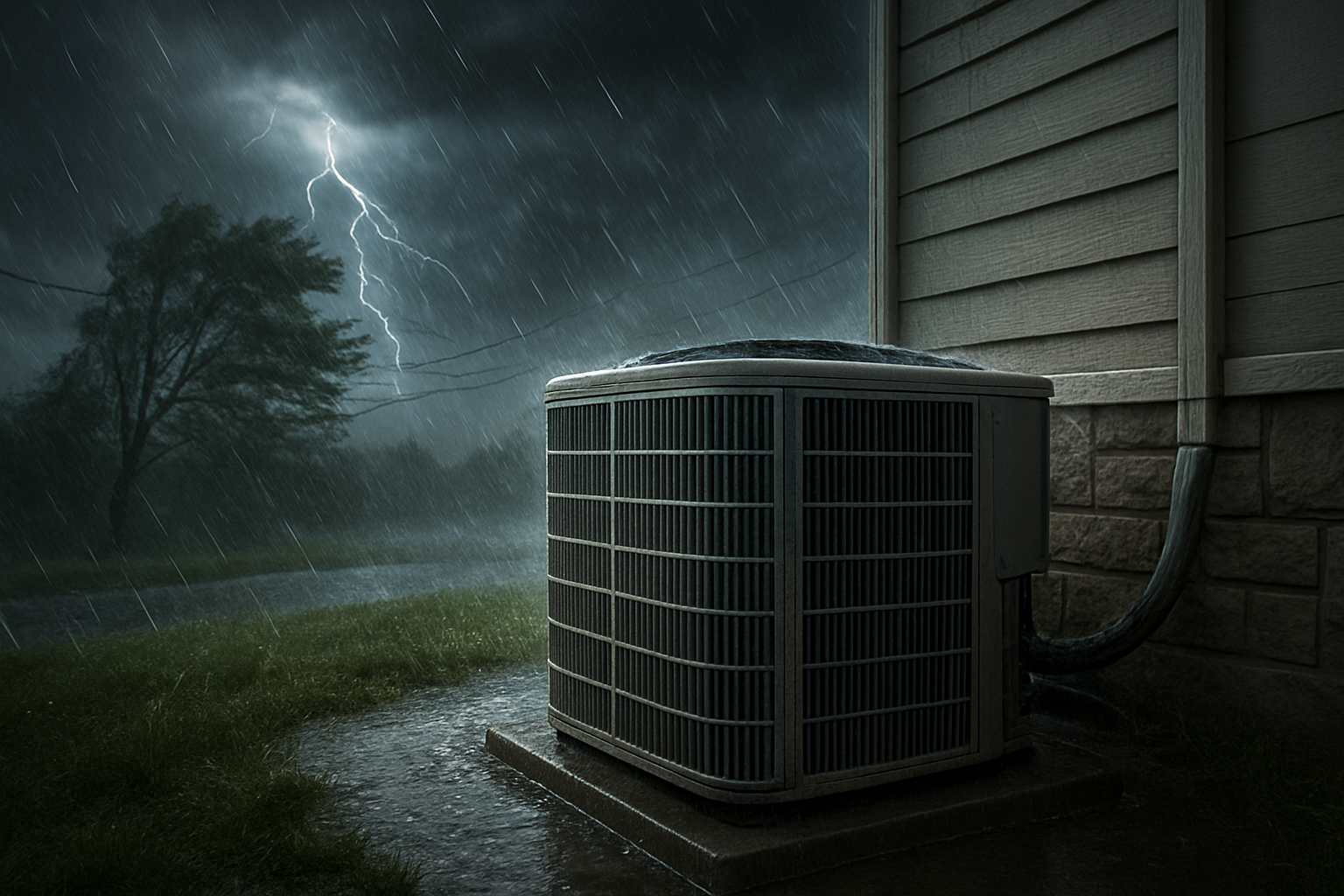
Spring storms bring powerful winds that can turn everyday objects into dangerous projectiles aimed directly at your HVAC system’s outdoor unit. Your air conditioner’s condenser unit sits exposed in your yard, making it vulnerable to flying branches, lawn furniture, roofing materials, and other debris carried by storm winds. These impacts can dent or crack the protective housing, damage the delicate fins on the condenser coils, and even knock your unit off its mounting pad.
Wind damage doesn’t just affect what you can see on the surface. Even minor impacts can misalign internal components, leading to refrigerant leaks, compressor problems, and reduced cooling efficiency that might not become apparent until you need your system most. The fan motor and electrical connections are particularly susceptible to damage from debris strikes, potentially leaving you without cooling during the hottest part of spring and summer.
Power Surges That Fry Electrical Components
When spring storms roll through, they bring lightning and unstable electrical conditions that can devastate your HVAC system’s sensitive electronic components. Power surges don’t just happen from direct lightning strikes – they occur when electrical service is restored after outages, when transformers fail, or when the electrical grid struggles to manage fluctuating demand during severe weather.
Your HVAC system contains expensive circuit boards, control panels, and variable-speed motors that can’t handle sudden voltage spikes. A single power surge can destroy your thermostat, circuit boards, capacitors, and compressor, leaving you facing thousands of dollars in repairs or complete system replacement. The worst part is that surge damage often isn’t immediately obvious – components may appear to work initially but fail days or weeks later due to weakened electrical circuits.
Flooding Risks to Ground-Level Equipment
Spring storms often bring heavy rainfall that can quickly overwhelm drainage systems and create flooding conditions around your home. If your HVAC equipment sits at ground level or in a basement, rising water poses a serious threat to expensive components that weren’t designed to get wet. Even a few inches of water can damage electrical connections, control panels, and motor components.
Water damage to your HVAC system goes beyond immediate electrical failures. Moisture can cause corrosion, mold growth, and long-term degradation of metal components. Your ductwork, if flooded, may require extensive cleaning or replacement to prevent indoor air quality issues. Ground-mounted heat pumps and air conditioning units are especially vulnerable because their electrical components are positioned low in the unit where floodwater hits first.
Hail Damage to Condenser Coils and Housing
Hailstones ranging from pea-sized to golf ball-sized can wreak havoc on your outdoor HVAC unit during spring storms. The aluminum fins on your condenser coils are incredibly thin and designed for maximum heat transfer, which makes them extremely vulnerable to hail impacts. Even small hailstones can bend, dent, or completely flatten these delicate fins, severely reducing your system’s ability to release heat effectively.
Hail damage to your condenser coils forces your system to work harder to achieve the same cooling results, driving up your energy bills and putting extra strain on the compressor. The protective housing around your unit, while more robust than the fins, can also suffer dents and cracks from larger hailstones. These openings can allow moisture and debris to enter the unit, potentially causing additional problems down the line. Just like other winter storm HVAC protection measures, preparing for spring weather requires proactive steps to minimize these risks.
Pre-Storm HVAC Protection Strategies
Installing Surge Protectors for Comprehensive Electrical Safety
Your HVAC system represents a significant investment that needs protection from electrical surges during spring storms. Power fluctuations and lightning strikes can cause thousands of dollars in damage to your heating and cooling equipment in seconds. Installing a whole-house surge protector at your electrical panel provides the first line of defense against major power surges entering your home.
Beyond whole-house protection, you should install individual surge protectors directly at your HVAC equipment. These point-of-use devices offer targeted protection for your furnace, air handler, and outdoor condenser unit. Look for surge protectors with joule ratings of at least 600-1000 for HVAC applications, as these systems draw significant power and need robust protection.
Don’t overlook your smart thermostats and zone control panels – these sophisticated electronic components are particularly vulnerable to voltage spikes. Installing smaller surge protectors for these devices costs far less than replacing damaged control boards after a storm passes through your area.
Securing Outdoor Units with Tie-downs and Barriers
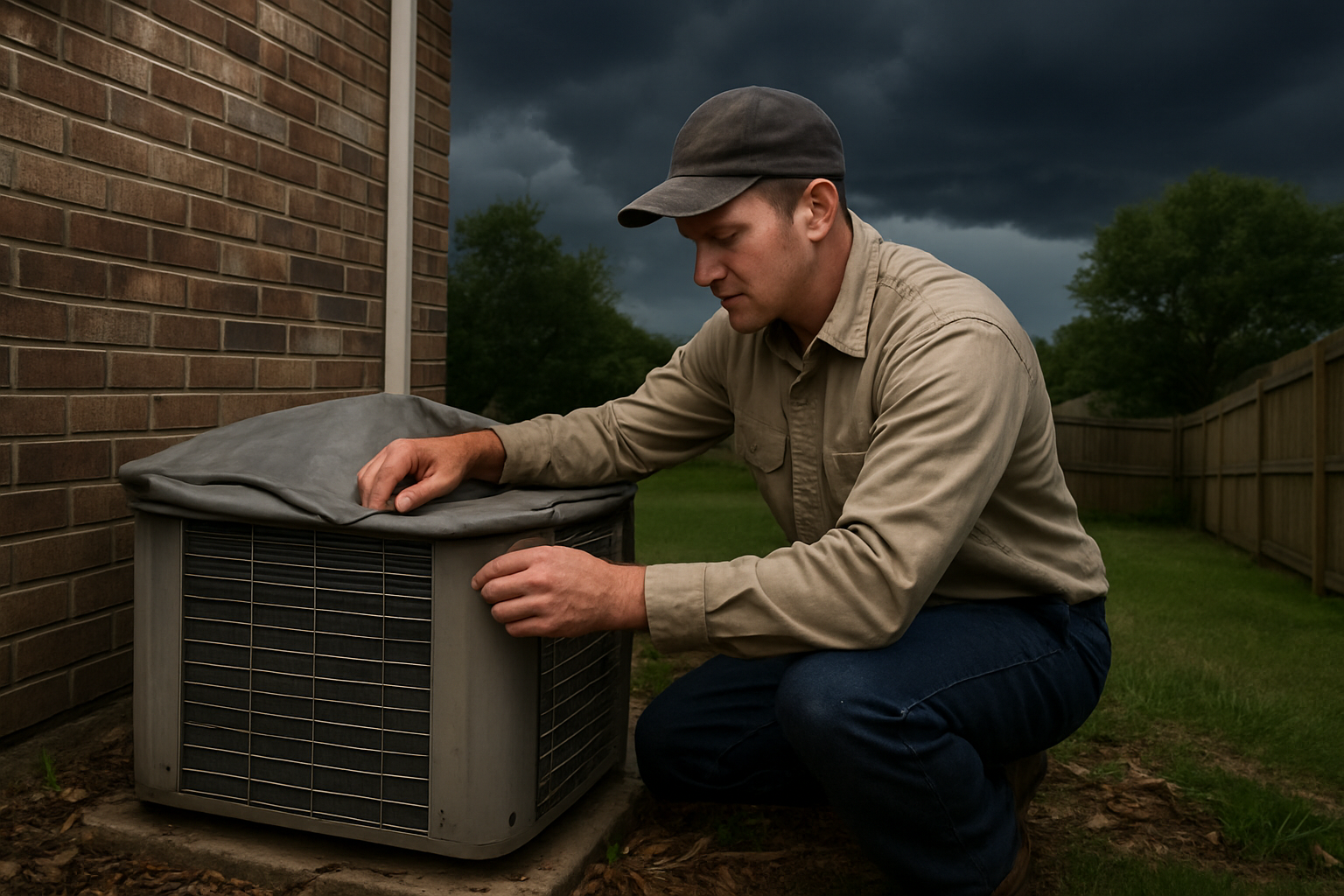
Your outdoor HVAC condenser faces the full brunt of spring weather conditions, making proper securing essential for HVAC storm preparedness. High winds can shift heavy units, damage refrigerant lines, or cause electrical connections to loosen. Installing concrete pads with anchor bolts provides a stable foundation that keeps your unit in place during severe weather.
Hurricane straps or tie-down brackets offer additional security for areas prone to extreme winds. These metal straps bolt to the unit and anchor into the concrete pad or ground, preventing your condenser from becoming a projectile during storms. Check local building codes, as some coastal areas require specific tie-down specifications.
Creating protective barriers around your outdoor unit shields it from flying debris without restricting airflow. A three-sided fence made from pressure-treated lumber or metal panels can deflect branches and other storm debris. Position barriers at least three feet away from the unit to maintain proper air circulation while providing meaningful protection.
For additional preparation strategies that complement your spring storm planning, consider reviewing comprehensive winter storm prep techniques that can be adapted for spring weather challenges.
Clearing Debris from Around Equipment for Proper Drainage
Standing water around your HVAC equipment creates serious risks during spring storms when heavy rainfall can overwhelm drainage systems. Before storm season arrives, clear all leaves, mulch, and debris from around both indoor and outdoor units. This simple step prevents water from pooling and potentially entering electrical components.
Your outdoor condenser needs at least two feet of clearance on all sides for proper drainage and airflow. Remove any accumulated organic matter that could block drainage paths or create moisture retention around the unit’s base. Pay special attention to the area beneath the unit where condensate drains typically discharge.
Indoor equipment requires similar attention, particularly around floor drains near furnaces and air handlers. Test your basement or utility room drainage by pouring water down floor drains to confirm they’re flowing freely. Clean out any buildup in condensate drain lines using a wet vacuum or compressed air to prevent backups during heavy spring rains.
Grading around your outdoor unit should direct water away from the equipment. If you notice water pooling after normal rainfall, consider adding drainage solutions like French drains or extended downspouts to redirect water flow. This proactive approach to spring storm HVAC protection prevents costly water damage that insurance may not fully cover.
Power Outage Preparedness for HVAC Equipment
Whole-house generator sizing for HVAC loads
Sizing your generator properly for HVAC loads requires careful calculation of your system’s power requirements. Your central air conditioning unit typically draws the highest electrical load in your home, especially during startup when it can demand 2-3 times its running wattage. A standard 3-ton AC unit needs approximately 15-20 kW during startup and 4-6 kW while running.
Calculate your total HVAC load by adding your air handler, outdoor unit, and any auxiliary heating elements. Heat pumps with electric backup strips can push requirements even higher. Most residential whole-house generators range from 14 kW to 26 kW, with 20-22 kW units handling most homes with central air effectively.
Professional load calculation considers your specific equipment nameplate data, not generic estimates. Your generator should handle the simultaneous startup of multiple HVAC components while maintaining power for essential systems like refrigeration and lighting.
Battery backup systems for critical components
Battery backup systems protect your most vulnerable HVAC components during brief power interruptions. Your thermostat, zone control panels, and smart home integration systems need continuous power to maintain programming and prevent system confusion when power returns.
Uninterruptible Power Supply (UPS) units designed for HVAC applications can keep thermostats and control systems running for 4-8 hours during outages. These systems prevent the common problem of losing all programmed settings and schedules when power fluctuates.
Consider battery backup for your sump pump if your HVAC system includes basement equipment. Flooded mechanical rooms spell disaster for expensive heating and cooling equipment. Smart thermostats with built-in batteries maintain Wi-Fi connectivity and send alerts about system status during outages.
Manual system shutdown procedures to prevent damage
Proper shutdown procedures protect your HVAC equipment from power surge damage when electricity returns. Start by turning off your main HVAC system at the thermostat, setting it to “OFF” rather than just adjusting temperature settings.
Next, locate your electrical panel and switch off the breakers for your air conditioning unit, heat pump, furnace, and air handler. This prevents damage from power surges that commonly occur when utility power restores after storms.
If you have a gas furnace, turn off the gas supply valve as a safety precaution. Mark the valve position before closing it so you can easily restore service later. Take photos of thermostat settings and system configurations before powering down to simplify restart procedures.
When power returns, wait 15 minutes before restoring HVAC power to allow electrical systems to stabilize. Turn on one HVAC component at a time, waiting several minutes between each to prevent overwhelming your electrical system.
Emergency heating and cooling alternatives
Spring storms can knock out power for days, making backup climate control essential for comfort and safety. Emergency heating backup options become critical when your primary HVAC system fails during unexpected cold snaps that often follow spring storms.
Portable space heaters provide targeted warming for occupied rooms, but require proper ventilation and safety precautions. Electric models work well with generator power, while propane heaters offer independence from electrical systems but need adequate ventilation to prevent carbon monoxide buildup.
For cooling during power outages, battery-powered fans, window units connected to generators, or portable AC units can maintain comfort in key areas. Whole-house fans that draw cool nighttime air can provide natural cooling when outdoor temperatures drop after storms pass.
Create cooling zones by closing off unused rooms and focusing portable units in bedrooms and main living areas. Reflective window coverings and strategic use of thermal mass help maintain comfortable temperatures longer during extended outages.
Stock emergency supplies including battery-powered fans, flashlights, and carbon monoxide detectors. Keep generator fuel properly stored and maintain your backup heating equipment regularly to ensure reliable operation when storms strike.
Post-Storm HVAC System Assessment
Visual Inspection Checklist for External Damage
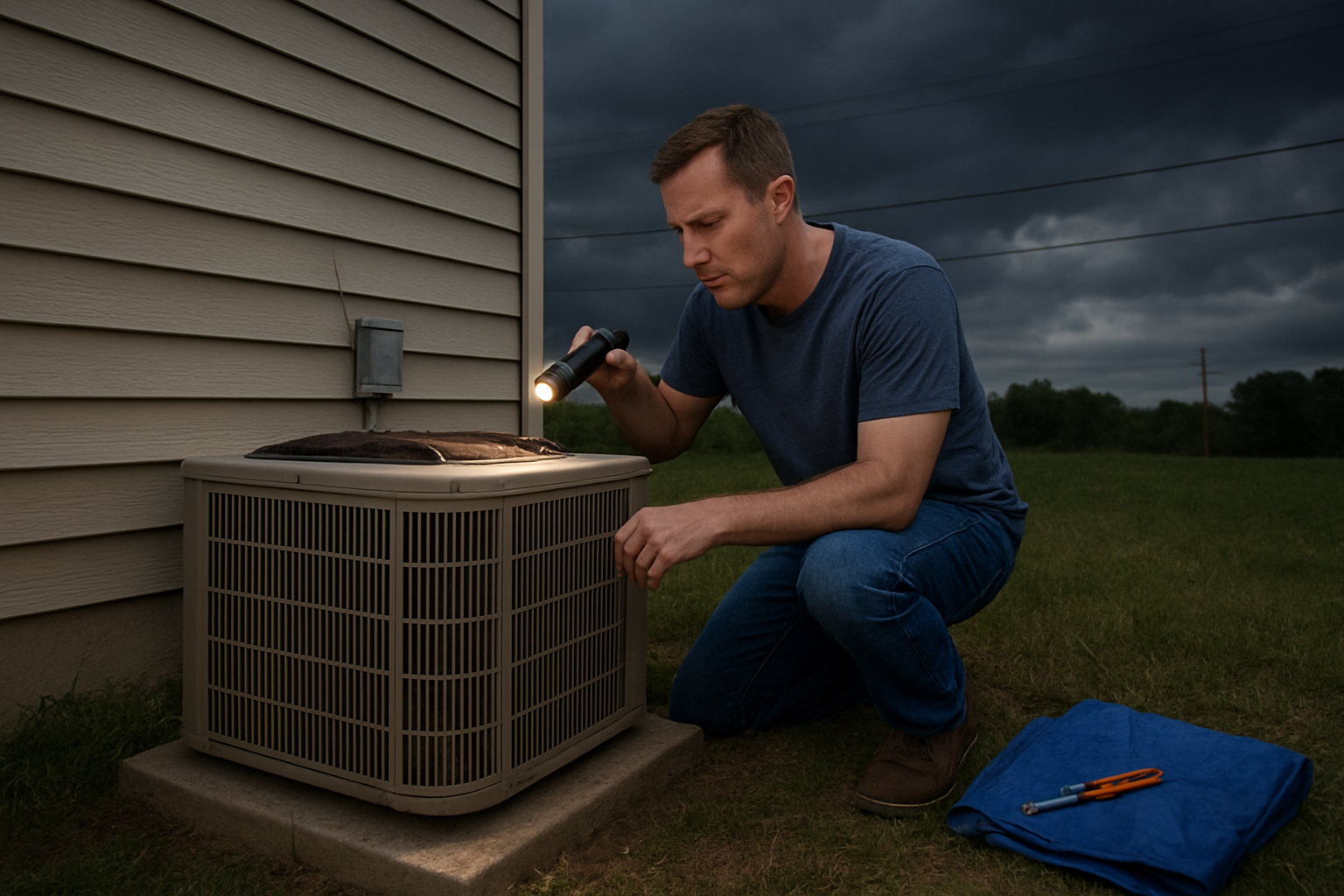
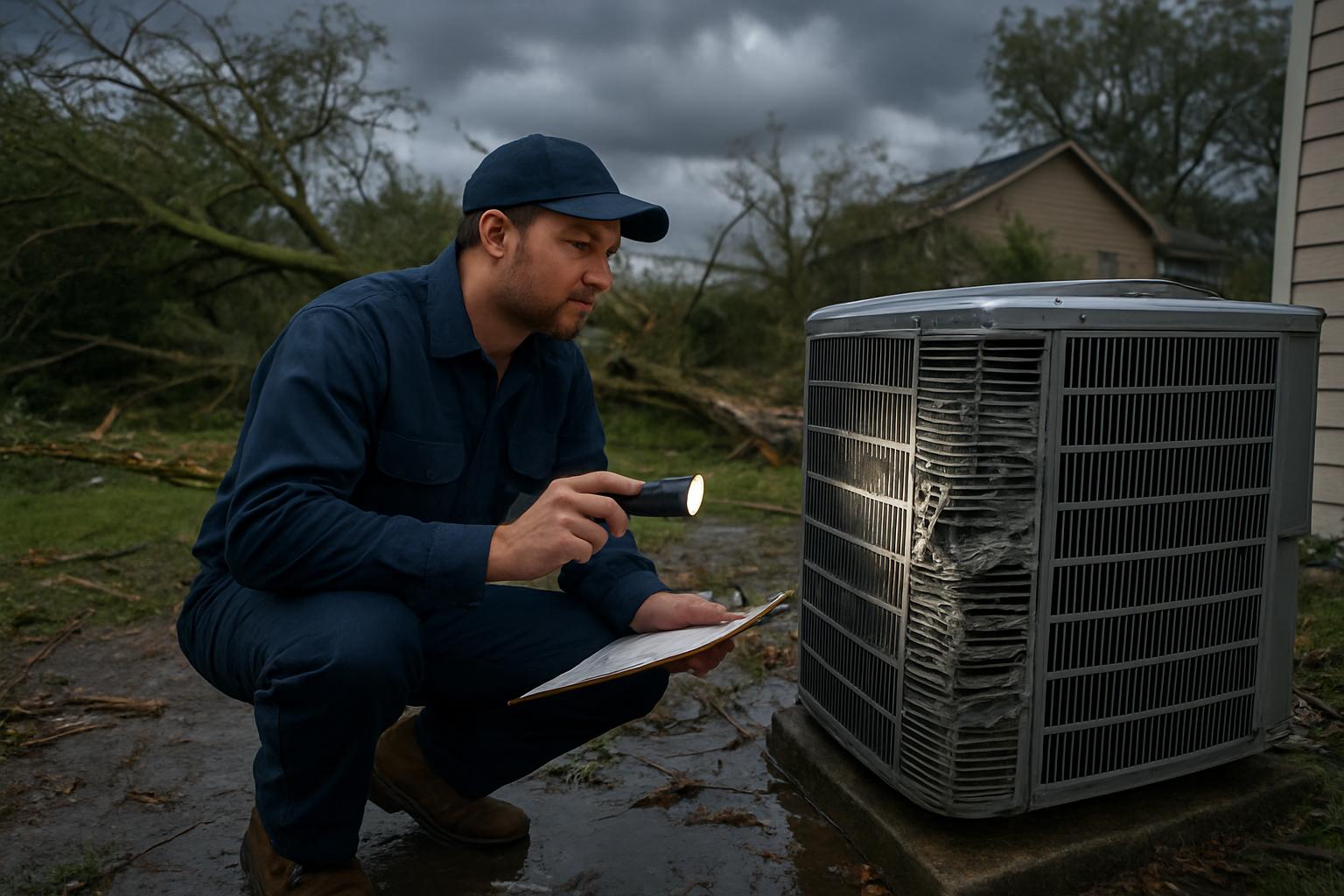
After spring storms pass through, your first step should be conducting a thorough visual inspection of your HVAC system’s exterior components. Start by examining your outdoor air conditioning unit for obvious signs of damage like dented panels, displaced fins, or debris lodged in the condenser coils. Look closely at the electrical connections and wiring – storm winds can cause loose connections or expose damaged wires that pose safety hazards.
Check the refrigerant lines running between your indoor and outdoor units. These copper lines are particularly vulnerable to impact damage from flying debris. Any visible dents, kinks, or disconnected insulation could indicate refrigerant leaks that require immediate professional attention.
Inspect your unit’s surrounding area for standing water or signs of flooding. Even if the water has receded, moisture damage can affect electrical components and create corrosion issues. Take photos of any damage you discover – these will be valuable for insurance claims and when communicating with HVAC professionals.
Don’t forget to examine your ductwork if any portions are visible in crawl spaces, basements, or attics. Look for separated joints, crushed sections, or water damage that could compromise your system’s efficiency and indoor air quality.
Electrical System Testing Before Restart
Never attempt to restart your HVAC system immediately after a power outage or storm without proper electrical system verification. Begin by checking your home’s main electrical panel for tripped breakers or blown fuses related to your HVAC system. Even if the breakers appear normal, power surges during storms can cause hidden electrical damage.
Test your HVAC system’s disconnect switch, typically located near the outdoor unit. This safety switch should move freely and make solid contact. If you notice any burning smells, charred marks, or sparking when operating the disconnect, stop immediately and contact a professional.
Use a non-contact voltage tester to verify that power is safely reaching your system before attempting any restart procedures. Many HVAC systems have built-in delay timers that prevent immediate restart after power restoration – this protects your compressor from damage. Wait at least five minutes after power returns before attempting to restart your system.
Check your thermostat display and settings. Power outages often reset programmable thermostats, and voltage fluctuations can damage electronic controls. If your thermostat isn’t responding normally or displays error codes, this could indicate electrical damage requiring professional diagnosis.
Professional Evaluation of Internal Components
While external inspections help identify obvious storm damage, internal HVAC components require professional expertise to properly assess. Schedule a comprehensive evaluation with a qualified technician who can test electrical circuits, measure refrigerant levels, and inspect internal components that aren’t visible during your initial assessment.
Professional technicians have specialized tools to detect hidden damage that storms and power outages commonly cause. They’ll test your system’s electrical components with multimeters, check compressor functionality, and verify that safety controls are operating correctly. This thorough evaluation can prevent costly breakdowns and identify potential safety hazards before they become dangerous.
Your HVAC professional should also inspect your system’s internal coils, blower motor, and control boards for signs of electrical damage or moisture intrusion. Storm preparation becomes especially important for coastal properties where salt air and moisture can accelerate damage to internal components.
Consider requesting a detailed written report of your system’s post-storm condition. This documentation proves valuable for insurance claims and helps you prioritize necessary repairs. Professional evaluation also ensures your system operates safely and efficiently throughout the remaining spring and summer seasons, protecting your investment and maintaining your family’s comfort.
Insurance and Financial Protection Strategies

Understanding HVAC Coverage in Homeowner Policies
Your standard homeowner’s insurance policy might not provide the comprehensive coverage you think it does for your HVAC system. Most policies cover sudden and accidental damage from storms, but they often exclude damage from power surges unless you’ve specifically added that protection. Weather-related damage like hail hitting your outdoor unit or wind damage to ductwork typically falls under covered perils, but gradual wear and tear or maintenance issues won’t be covered.
You’ll want to review your policy’s specific language around electrical damage and power surge protection. Many insurers require separate endorsements for electronics and appliances, which would include your HVAC equipment. Age restrictions also apply – older systems may have limited coverage or depreciated value settlements rather than full replacement cost coverage.
Documenting Equipment for Insurance Claims
Before any storm season begins, create a comprehensive inventory of your HVAC equipment. Take detailed photos and videos of your outdoor units, indoor components, ductwork, and any visible model numbers or serial plates. Store these digitally in cloud storage so they’re accessible even if your home suffers damage.
Keep all maintenance records, installation documents, and receipts for any recent upgrades or repairs. Your insurance adjuster will need proof of the system’s pre-storm condition and value. Include photos showing the area around your outdoor unit – this helps establish that proper clearances were maintained and the unit was in good condition before the storm.
Create a simple spreadsheet listing each component’s make, model, installation date, and estimated value. Include any warranty information and recent service records. This documentation becomes invaluable when filing claims and helps ensure you receive fair compensation for your spring storm HVAC protection investment.
Budgeting for Emergency Repairs and Replacements
Smart homeowners set aside funds specifically for HVAC emergencies before storm season arrives. A good rule of thumb is to budget 1-2% of your home’s value annually for heating and cooling system maintenance and unexpected repairs. For a $300,000 home, that means $3,000-$6,000 in your emergency fund.
Consider the age of your system when planning your budget. Systems over 10-15 years old are more likely to need major repairs or replacement after storm damage. Getting repair quotes in advance helps you understand potential costs – compressor replacement can run $2,000-$4,000, while full system replacement might cost $8,000-$15,000 or more.
Some homeowners opt for HVAC financing programs or home equity lines of credit as backup funding sources. These options can help spread the cost of major repairs over time, making it easier to restore comfort quickly after storm damage rather than waiting to save up funds.
Preventive Maintenance Contracts That Include Storm Damage
Many HVAC contractors offer comprehensive maintenance agreements that go beyond basic tune-ups to include emergency storm response services. These contracts typically provide priority service during outages and may include discounted rates for storm-related repairs. Some even offer equipment protection plans that cover certain types of electrical damage.
When evaluating maintenance contracts, look for agreements that include pre-storm system checks, priority scheduling during emergencies, and coverage for power surge damage to internal components. The best contracts also provide detailed documentation of your system’s condition before and after storm events, which supports insurance claims.
Winter Storm HVAC Protection strategies can complement your spring preparations, giving you year-round protection planning. Quality maintenance agreements often cost $200-$500 annually but can save thousands in emergency repair costs and provide peace of mind knowing professional help is just a phone call away when storms strike your area.
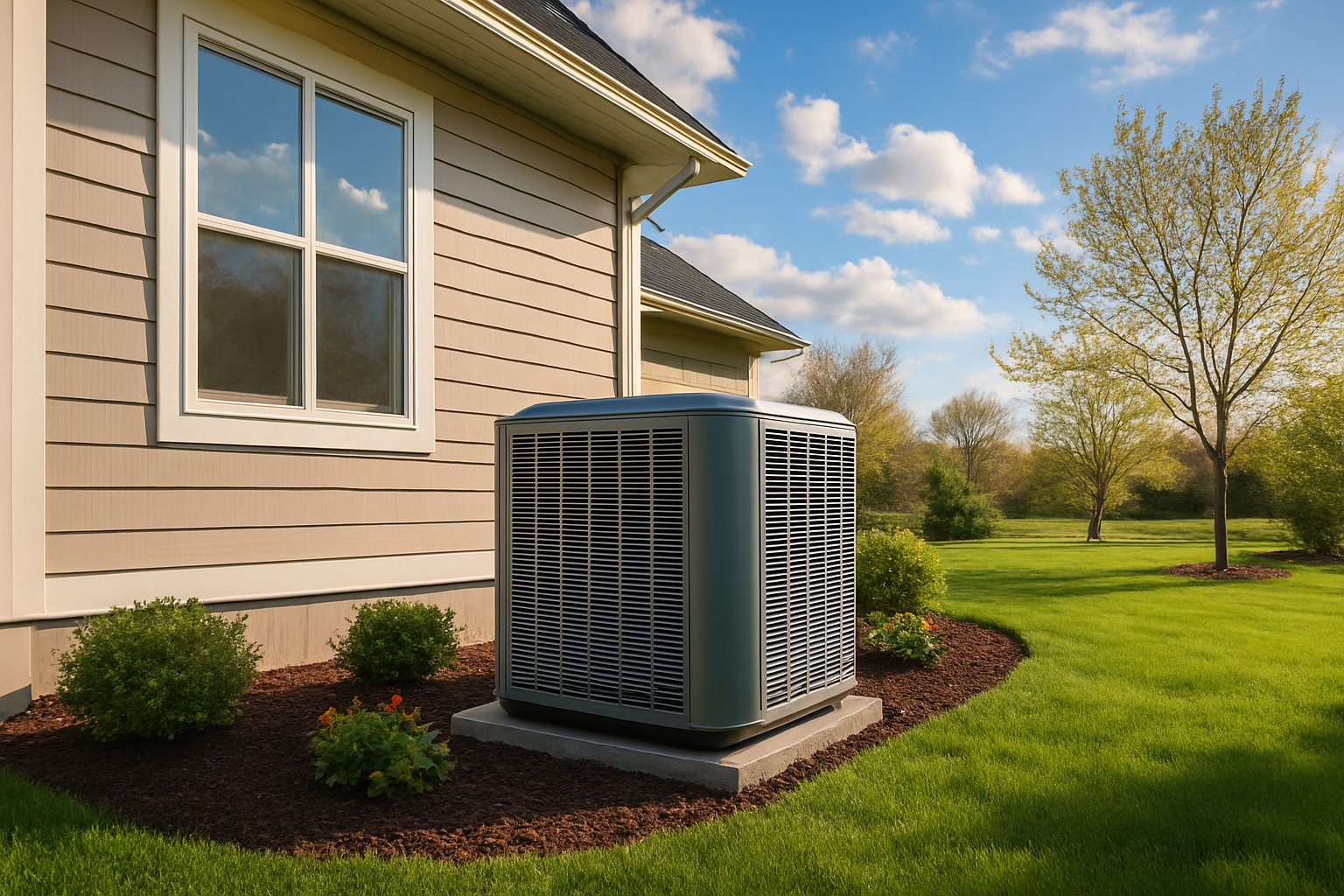
Your HVAC system represents a significant investment, and spring storms can pose serious threats to both the equipment and your wallet. From power surges that can fry electrical components to debris damage and flooding, these seasonal weather events require proactive planning. You can protect your system by installing surge protectors, securing outdoor units, trimming nearby vegetation, and having a qualified technician perform pre-season maintenance. Don’t forget to know your system’s restart procedures after power outages and keep your insurance coverage up to date.
When storms do hit, you’ll be glad you took these preventive steps. After any severe weather, inspect your HVAC equipment carefully and call professionals if you notice any damage or unusual operation. Your comfort and financial well-being depend on keeping your heating and cooling systems running smoothly year-round. Start preparing now before the next storm system moves through your area – your future self will thank you for the peace of mind.
Ready to make sure your home is comfortable and efficient this spring? Contact UG Nasons today for expert HVAC maintenance, upgrades, and emergency service across Rhode Island. Get in touch now!