
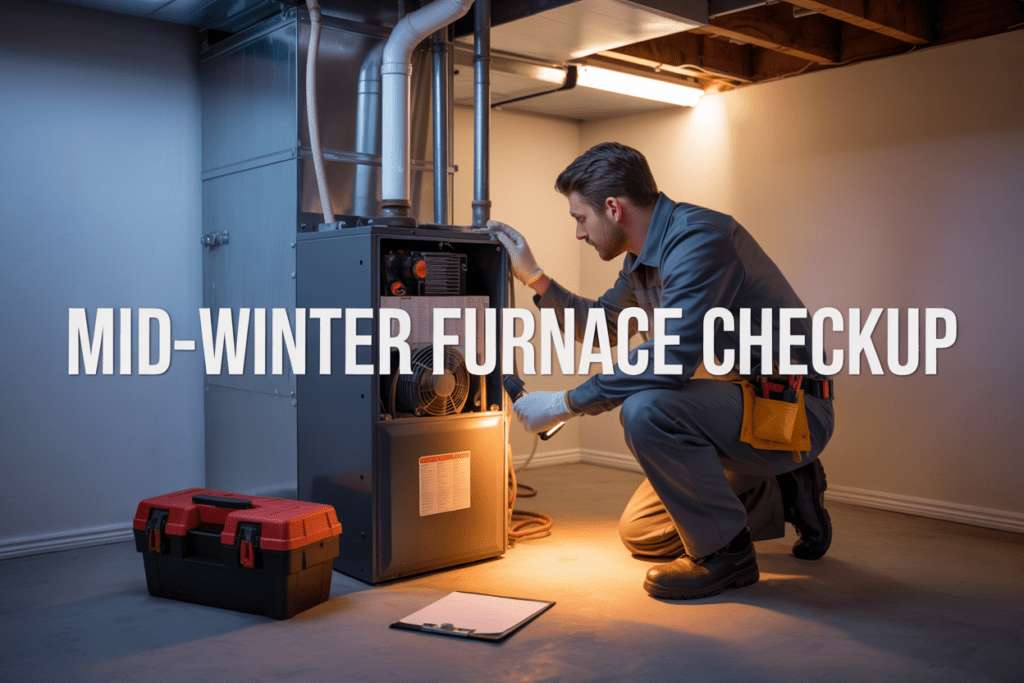
Your furnace is working overtime during winter’s coldest months, making a mid-winter furnace checkup essential for keeping your family warm and safe. This guide is designed for homeowners who want to understand when to call professionals and what they can safely check themselves.
Winter furnace maintenance goes beyond changing filters – it’s about catching dangerous issues like carbon monoxide leaks and preventing costly breakdowns when you need heat most. You’ll learn about critical warning signs that demand immediate attention and discover which furnace inspection checklist items require professional expertise versus simple DIY furnace inspection tasks.
We’ll walk you through what happens during a professional furnace tune up, including typical furnace maintenance cost expectations and the safety protocols technicians follow. You’ll also see how preventive furnace maintenance pays for itself by avoiding emergency repairs and extending your system’s lifespan through proper winter HVAC maintenance practices.
Critical Winter Hazards That Demand Immediate Furnace Attention

Carbon Monoxide Leaks That Threaten Your Family’s Safety
Your furnace produces carbon monoxide as a natural byproduct of combustion, and when everything’s working properly, this deadly gas safely exits through your venting system. But winter’s relentless operation puts enormous stress on heat exchangers, potentially creating dangerous cracks that allow carbon monoxide to seep into your living space.
You can’t smell, see, or taste carbon monoxide, making it especially dangerous during peak heating months when you spend more time indoors with windows closed. Even small amounts can cause headaches, dizziness, and fatigue—symptoms you might dismiss as winter blues or seasonal illness. Higher concentrations can be fatal.
Your furnace’s heat exchanger expands and contracts repeatedly during winter cycling, and older units are particularly vulnerable to stress fractures. A mid-winter furnace checkup includes thorough inspection of these critical components and carbon monoxide testing to ensure your family’s safety.
Overworked Components Prone to Mid-Season Failure
January and February represent the most demanding months for your heating system. Your furnace has already been running for months, and the coldest weather still lies ahead. Components like blower motors, ignitors, and control boards work overtime during these peak months, making them prime candidates for failure.
Your furnace filter faces its biggest challenge during mid-winter when dry air carries more dust and debris through your system. A clogged filter forces your blower motor to work harder, leading to overheating and premature failure. The added strain also affects other components throughout your system.
Electrical connections loosen from constant heating and cooling cycles, creating dangerous arcing and potential fire hazards. Gas valves and safety switches that seemed fine in November may start acting up by February when they’ve endured months of continuous operation.
Reduced Efficiency Driving Up Energy Costs
Your furnace loses efficiency throughout the heating season as components accumulate dirt and wear. What started as a well-tuned system in fall gradually becomes an energy-wasting machine that struggles to maintain comfortable temperatures.
Dirty burners create incomplete combustion, wasting fuel and reducing heat output. Your system runs longer cycles to achieve the same temperature, dramatically increasing your winter heating costs. A system that’s only 80% efficient compared to its original performance means you’re throwing money away on every heating cycle.
Accumulated dust on heat exchangers acts like insulation, preventing efficient heat transfer. Your furnace burns the same amount of fuel but delivers less heat to your home, forcing longer run times and higher utility bills during the most expensive heating months.
Poor Air Quality Affecting Respiratory Health
Winter months already challenge your respiratory system with dry air and increased indoor time. A dirty, poorly maintained furnace makes things worse by circulating contaminated air throughout your home.
Your furnace’s air handler moves thousands of cubic feet of air daily, and without proper maintenance, it becomes a distribution system for dust, allergens, and pollutants. Dirty ductwork and clogged filters turn your heating system into an air quality problem rather than a comfort solution.
Incomplete combustion from dirty burners can introduce harmful particles into your air supply. Family members with asthma, allergies, or other respiratory conditions may notice worsening symptoms during winter months when your furnace operates most frequently.
Regular mid-winter furnace maintenance addresses these air quality issues before they impact your family’s health and comfort during the season when you need reliable heating most.
Essential Components Your Mid-Winter Inspection Should Cover

Heat Exchanger Cracks and Corrosion Assessment
Your heat exchanger is the heart of your furnace system, and during a mid-winter furnace checkup, it deserves special attention. This critical component transfers heat from combustion gases to the air that circulates throughout your home. When cracks develop in the heat exchanger, they create serious safety risks by allowing carbon monoxide to leak into your living spaces.
During winter’s peak usage, heat exchangers face extreme thermal stress as they repeatedly heat up and cool down. This constant expansion and contraction can cause hairline cracks that weren’t visible during your fall maintenance. Professional technicians use specialized inspection methods, including video cameras and combustion analysis, to detect even microscopic cracks that could compromise your family’s safety.
Corrosion poses another significant threat to heat exchangers, especially in coastal areas where salt air accelerates metal deterioration. You’ll want your technician to examine the entire heat exchanger surface for rust, pitting, or white powdery deposits that indicate corrosion. Early detection allows for repairs or replacement before complete system failure occurs.
Signs that warrant immediate heat exchanger inspection include unusual odors, visible rust flakes near your furnace, or soot buildup around the unit. If your technician discovers significant damage, replacement becomes necessary for safe operation—making this assessment a crucial part of your winter furnace maintenance routine.
Blower Motor and Fan Belt Condition Evaluation
Your blower motor works overtime during winter months, and this increased workload can reveal problems that weren’t apparent during lighter usage periods. A thorough mid-winter inspection should include checking the motor’s electrical connections, measuring amperage draw, and listening for unusual noises that indicate bearing wear or motor strain.
Fan belts deserve particular attention during your winter furnace maintenance because cold temperatures can make them brittle and prone to cracking. Your technician should inspect the belt for proper tension—too loose and it’ll slip, reducing airflow efficiency; too tight and it’ll wear out prematurely or damage the motor bearings. Look for signs of fraying, cracking, or glazing on the belt surface.
The blower assembly itself requires lubrication checks and cleaning to maintain optimal performance. Dust buildup on blower blades reduces efficiency and creates imbalanced operation that strains the motor. During peak winter operation, even small reductions in airflow can significantly impact your home’s comfort and increase energy costs.
Your inspection should also include checking the blower housing for loose connections, verifying proper wheel alignment, and ensuring all safety switches function correctly. These components work together as a system, and problems with one element can cascade into expensive repairs if left unaddressed during the heating season.
Gas Connections and Valve Safety Verification
Gas line safety becomes paramount during winter when your furnace operates continuously for extended periods. Your professional furnace tune up should include comprehensive testing of all gas connections using electronic leak detection equipment and soapy water solutions to identify even the smallest leaks.
The gas valve assembly requires meticulous inspection for proper operation, including testing the safety shutoff mechanisms that prevent gas flow when the pilot light or ignition system fails. These safety features are your primary protection against gas accumulation, making their reliable operation essential for safe winter heating.
Proper gas pressure verification ensures your furnace receives the correct fuel supply for efficient combustion. Too little pressure results in incomplete burning and potential carbon monoxide production, while excessive pressure can damage components and create safety hazards. Your technician should test both inlet and manifold pressures against manufacturer specifications.
Flexible gas connectors, particularly common in newer installations, need visual inspection for kinks, damage, or improper installation. These connectors can deteriorate over time or shift due to furnace vibration, creating potential leak points. Winter’s continuous operation puts additional stress on these connections, making thorough inspection part of your winter furnace maintenance routine.
Regular verification of your gas meter and main shutoff valve location ensures you’re prepared for emergencies and helps identify any utility company concerns that could affect your heating system’s operation throughout the cold season.
Professional vs DIY Checkup: What Homeowners Can and Cannot Handle

Simple maintenance tasks you can perform safely
Your DIY furnace inspection can cover several basic yet important tasks that keep your heating system running smoothly during winter. Start by checking and replacing your furnace filter monthly—dirty filters force your system to work harder and reduce efficiency. You can also inspect visible ductwork for obvious damage, ensure vents and registers remain unobstructed, and verify that your thermostat batteries are fresh.
Keep the area around your furnace clear of storage items, debris, and flammable materials. Test your carbon monoxide detectors and smoke alarms regularly, and listen for unusual sounds like grinding, squealing, or banging that might indicate developing problems. These simple steps form the foundation of effective winter furnace maintenance and help you catch minor issues before they become major headaches.
Visual inspections of your furnace exterior can reveal loose panels, rust spots, or obvious wear that needs professional attention. You can also monitor your energy bills for unexpected spikes that might signal efficiency problems.
Complex diagnostics requiring certified technician expertise
Professional technicians handle the intricate aspects of your mid-winter furnace checkup that require specialized training and equipment. Gas line connections, heat exchanger inspections, and electrical component testing demand expertise you simply can’t replicate safely at home. Licensed professionals can detect dangerous carbon monoxide leaks, assess burner flame patterns, and evaluate combustion efficiency—critical safety checks that protect your family.
Technicians use calibrated instruments to measure gas pressure, check electrical connections for proper voltage, and inspect internal components like blower motors and control boards. They can spot early signs of heat exchanger cracks, which pose serious safety risks, and identify worn parts before they fail completely.
Complex diagnostic equipment allows professionals to test system cycling, measure temperature differentials, and evaluate overall performance metrics that determine whether your furnace operates at peak efficiency. These assessments require years of training and certification that homeowners simply don’t possess.
Safety protocols that protect your family and property
Safety should always be your top priority when performing any furnace safety inspection tasks. Before attempting any DIY maintenance, turn off power to your furnace at both the unit switch and circuit breaker. Never attempt to inspect or repair gas connections, electrical components, or internal mechanisms without proper training.
Always use proper lighting and avoid working alone when possible. Keep a flashlight handy and never use open flames or smoking materials near your furnace area. If you smell gas, leave immediately and call your utility company—don’t attempt to locate the source yourself.
Professional technicians follow strict safety protocols including proper ventilation procedures, gas leak detection methods, and electrical safety standards. They carry specialized equipment like combustible gas detectors and know how to safely shut down systems when problems are discovered. This level of safety expertise protects not just your property, but potentially saves lives by preventing carbon monoxide poisoning and gas-related accidents.
Cost comparison between professional service and potential repairs
Investing in a professional furnace tune up typically costs between $100-200, while emergency repairs during winter can easily exceed $500-1,500 or more. When you consider that major component failures like heat exchanger replacement can cost $2,000-4,000, professional maintenance becomes incredibly cost-effective.
| Service Type | Average Cost | Potential Savings |
|---|---|---|
| Professional Mid-Winter Checkup | $100-200 | Prevents $500-1,500 repairs |
| DIY Maintenance (filters, basic cleaning) | $30-50 | Maintains efficiency |
| Emergency Winter Repair | $500-2,000+ | Could be prevented |
| Complete System Replacement | $3,000-8,000 | Avoided with proper maintenance |
Professional maintenance extends your furnace lifespan by 3-5 years on average, representing thousands in replacement cost savings. Technicians catch small problems—like worn belts or dirty burners—before they damage expensive components. They also optimize system efficiency, reducing your monthly heating costs by 10-15%.
Winter heating costs can quickly spiral out of control with an inefficient system, making professional maintenance an investment that pays for itself through lower utility bills and avoided repair costs.
Step-by-Step Process of a Professional Mid-Winter Furnace Inspection

Initial System Performance and Efficiency Testing
Your professional furnace inspection begins with comprehensive performance evaluations that reveal how well your heating system operates under winter stress. The technician starts by measuring your furnace’s heat output, comparing actual performance against manufacturer specifications. This involves checking temperature differentials between supply and return air, which should typically range between 35-70°F depending on your system type.
Efficiency testing includes analyzing your furnace’s combustion process using specialized equipment that measures gas pressures, flame characteristics, and heat exchanger performance. The technician examines your system’s cycling patterns, noting how frequently your furnace turns on and off, which directly impacts both energy consumption and component wear. Draft measurements ensure proper ventilation, while airflow testing across your ductwork identifies restrictions that force your furnace to work harder than necessary.
Comprehensive Safety and Emissions Evaluation
Safety takes priority during your professional furnace tune up, with technicians conducting thorough carbon monoxide testing throughout your home. They inspect your heat exchanger for cracks or corrosion that could allow dangerous gases to enter your living space. Venting systems receive detailed examination to ensure proper exhaust flow and prevent backdrafting.
Electrical connections undergo scrutiny for loose wires, corrosion, or overheating signs. Gas line inspections check for leaks using electronic detection equipment, while pressure testing verifies your system operates within safe parameters. The technician examines your furnace’s safety controls, including limit switches, flame sensors, and pressure switches that protect your system from dangerous operating conditions. These comprehensive evaluations help prevent the winter heating emergencies that coastal storms can trigger.
Component Cleaning and Minor Adjustment Procedures
Your winter furnace maintenance concludes with detailed cleaning and calibration procedures that restore peak performance. The technician removes and cleans your blower assembly, eliminating dust buildup that reduces airflow and forces your system to work harder. Burner cleaning ensures proper fuel combustion and flame patterns, while control board cleaning prevents electrical malfunctions.
Filter replacement represents a critical maintenance step, with technicians installing high-quality filters appropriate for your system and home conditions. They calibrate your thermostat for accurate temperature control and adjust gas pressures to optimize combustion efficiency. Belt tensioning, lubrication of moving parts, and cleaning of condensate drains round out the service.
Minor adjustments include fine-tuning your blower speed for optimal comfort and efficiency, adjusting dampers for proper airflow distribution, and calibrating safety controls to manufacturer specifications. These seemingly small tweaks can significantly impact your system’s reliability and energy consumption throughout the remaining winter months.
Investment Returns: How Mid-Winter Maintenance Saves Money Long-Term

Extended Equipment Lifespan Reducing Replacement Costs
Your furnace represents a significant investment, typically costing between $3,000 to $8,000 for a quality system. Regular mid-winter furnace checkup sessions can extend your equipment’s life by 5-10 years, potentially saving you thousands in premature replacement costs. When you skip maintenance, small issues compound into major problems that stress your entire system.
Think of it like car maintenance – neglecting oil changes doesn’t just hurt your engine; it creates a cascade of problems throughout the vehicle. Your furnace works the same way. Dirty filters force the blower motor to work harder, worn belts can cause expensive motor damage, and neglected heat exchangers can develop dangerous cracks that require complete system replacement.
Professional winter furnace maintenance catches these issues early when repairs cost hundreds instead of thousands. A properly maintained furnace can easily reach 20-25 years of reliable service, while neglected systems often fail after just 10-15 years.
Improved Energy Efficiency Lowering Monthly Bills
Energy efficiency drops dramatically without regular maintenance. A dirty filter alone can reduce your system’s efficiency by 15-20%, directly translating to higher monthly bills. When you maintain your furnace properly, you’ll notice immediate savings on your heating costs.
Here’s what happens to your energy bills with different maintenance scenarios:
| Maintenance Level | Efficiency Impact | Monthly Bill Increase |
|---|---|---|
| Well-maintained | Optimal efficiency | Baseline |
| Minimal maintenance | 10-15% efficiency loss | $30-50 more |
| Neglected system | 25-40% efficiency loss | $75-150 more |
Clean components work together seamlessly. Your blower motor doesn’t strain against clogged filters, your heat exchanger transfers heat effectively without dust buildup, and your system cycles properly without wasting energy. Over a typical heating season, you could save $200-400 just by keeping up with preventive furnace maintenance.
Prevention of Emergency Repairs During Peak Winter Months
Emergency repairs during frigid January nights cost significantly more than scheduled maintenance. HVAC contractors charge premium rates for after-hours service, often 50-100% higher than regular service calls. When your system fails during peak winter demand, you’re also competing with other emergency calls, potentially leaving your family without heat for extended periods.
Mid-winter maintenance identifies potential failures before they happen. Your technician can spot warning signs like unusual noises, irregular cycling, or components showing wear. Replacing a $50 capacitor during a scheduled visit beats paying $300 for an emergency call plus overtime labor charges.
Emergency repairs also create secondary problems. When your furnace fails completely, you might need temporary heating solutions that spike your electricity bill. Frozen pipes become a real risk, potentially causing thousands in water damage. Winter heating costs can skyrocket when you’re forced into emergency mode.
Maintained Warranty Coverage Protecting Your Investment
Most furnace warranties require documented proof of regular maintenance to remain valid. Manufacturers know that maintained systems last longer and perform better, so they protect themselves by requiring homeowners to uphold their end of the deal. Skipping professional furnace tune up sessions can void your warranty completely, leaving you responsible for expensive repairs that should be covered.
Your warranty documentation should include:
- Annual maintenance records from licensed technicians
- Filter replacement logs
- Any repairs or part replacements
- Professional inspection reports
When a major component fails under warranty, you’ll need this maintenance history to prove your claim. A $50 maintenance visit protects thousands in potential warranty coverage. Smart homeowners treat maintenance as insurance for their heating investment – a small cost that protects against major expenses down the road.

Your furnace works hardest during the coldest months, making mid-winter the perfect time to catch problems before they leave you shivering in the dark. Winter brings unique challenges like carbon monoxide risks, frozen pipes, and system overload that can turn dangerous fast. While you can handle basic tasks like changing filters and checking vents, the technical stuff like gas line inspections and heat exchanger checks need a professional’s trained eye.
A mid-winter checkup might cost you a couple hundred dollars, but it beats the thousands you’d spend on emergency repairs or a full replacement in February. Your furnace will run more efficiently, your energy bills will stay manageable, and you’ll sleep better knowing your family is safe and warm. Don’t wait for strange noises or cold spots to force your hand – schedule that checkup now and give your furnace the attention it deserves during its busiest season.
Don’t wait for a breakdown—schedule your mid-winter furnace checkup with UGNasons and enjoy peace of mind all season. Book online at ugnasons.com, call (401) 847-2497, or email [email protected] for expert furnace maintenance and reliable service.